
What Does “BPA-Free” Really Mean - And Why It Matters
BPA-free labels are everywhere, but what is BPA, why is it used, and why should you avoid it? Learn the science behind BPA, its potential health risks, and how to make safer choices.
What Is BPA?
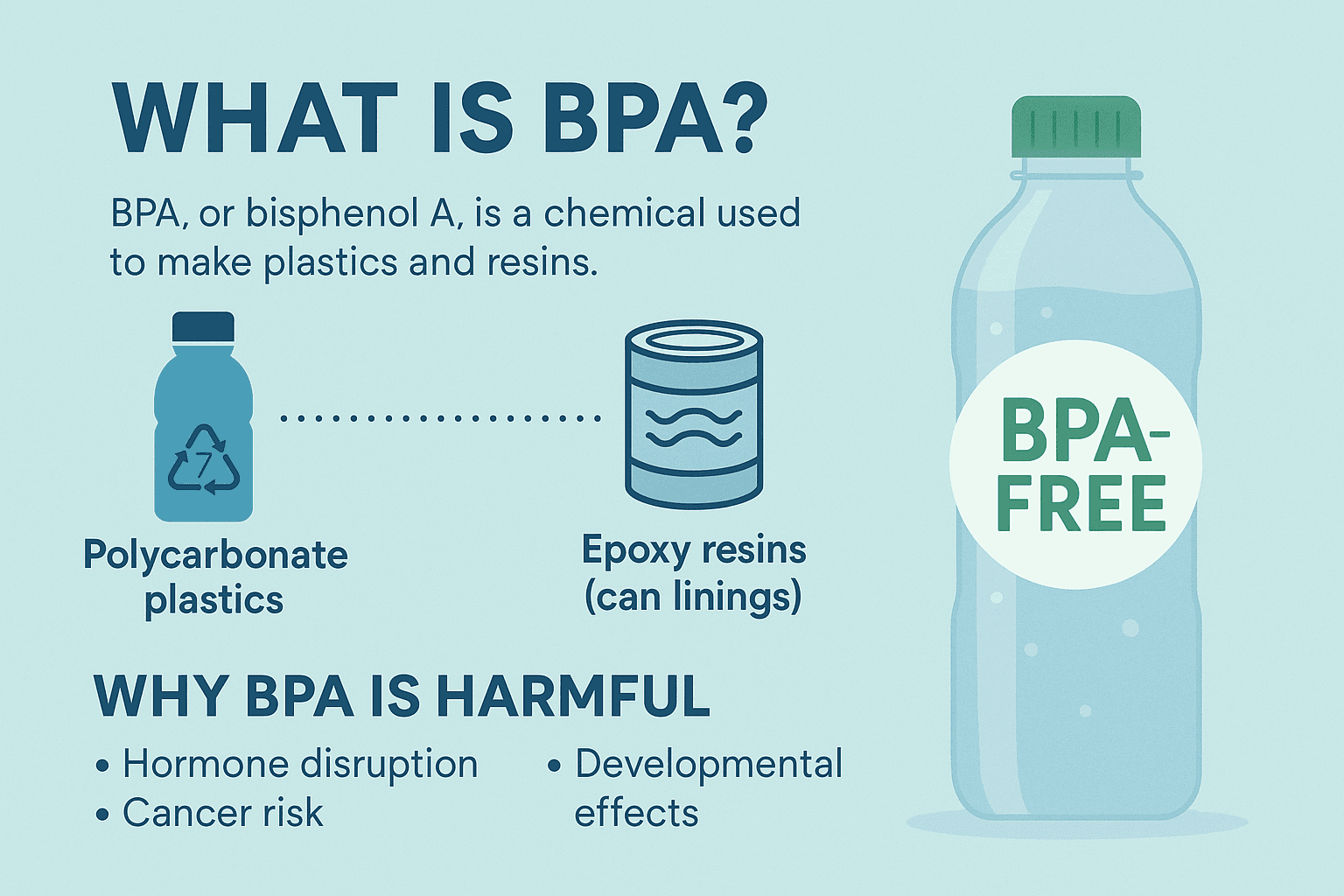
BPA, or bisphenol A, is a synthetic chemical used since the 1960s to harden plastics and line metal food and beverage cans. It's most commonly found in polycarbonate plastics (labeled with recycling code #7) and epoxy resins that coat the inside of cans and bottle tops NIH.
Why Is BPA Used in Products?
Manufacturers have used BPA because it's inexpensive, durable, and lightweight. It helps make plastics shatter-resistant and flexible—perfect for reusable bottles, storage containers, and canned food linings.
Why Is BPA Harmful?
BPA is an endocrine disruptor, which means it can mimic hormones like estrogen and interfere with the body’s natural hormone systems. Studies have linked BPA exposure to a range of health issues, including:
- Hormonal imbalances and reproductive problems study
- Increased risk of certain cancers, such as breast and prostate source
- Developmental effects in children and infants PubMed
- Obesity and metabolic disorders PubMed
Even low levels of BPA exposure may be harmful, especially during pregnancy and early childhood.
How Can You Avoid BPA?
Here are a few practical steps:
- Look for BPA-free labels on bottles, containers, and baby products.
- Avoid plastics labeled with recycling code #7 (or “PC”), which may contain BPA.
- Use glass, stainless steel, or BPA-free plastic alternatives for food and drink storage.
- Don’t microwave or heat plastic containers unless they’re explicitly labeled microwave-safe—heat can cause BPA to leach out.
- Choose fresh or frozen foods over canned items when possible, or look for cans labeled BPA-free lining.
Is “BPA-Free” Always Safer?
Sometimes, BPA-free plastics still contain BPS or BPF, similar compounds that may have comparable endocrine-disrupting effects EHP study. Look for brands that disclose their full materials and avoid all bisphenols when possible.
Sign in to vote on this article