
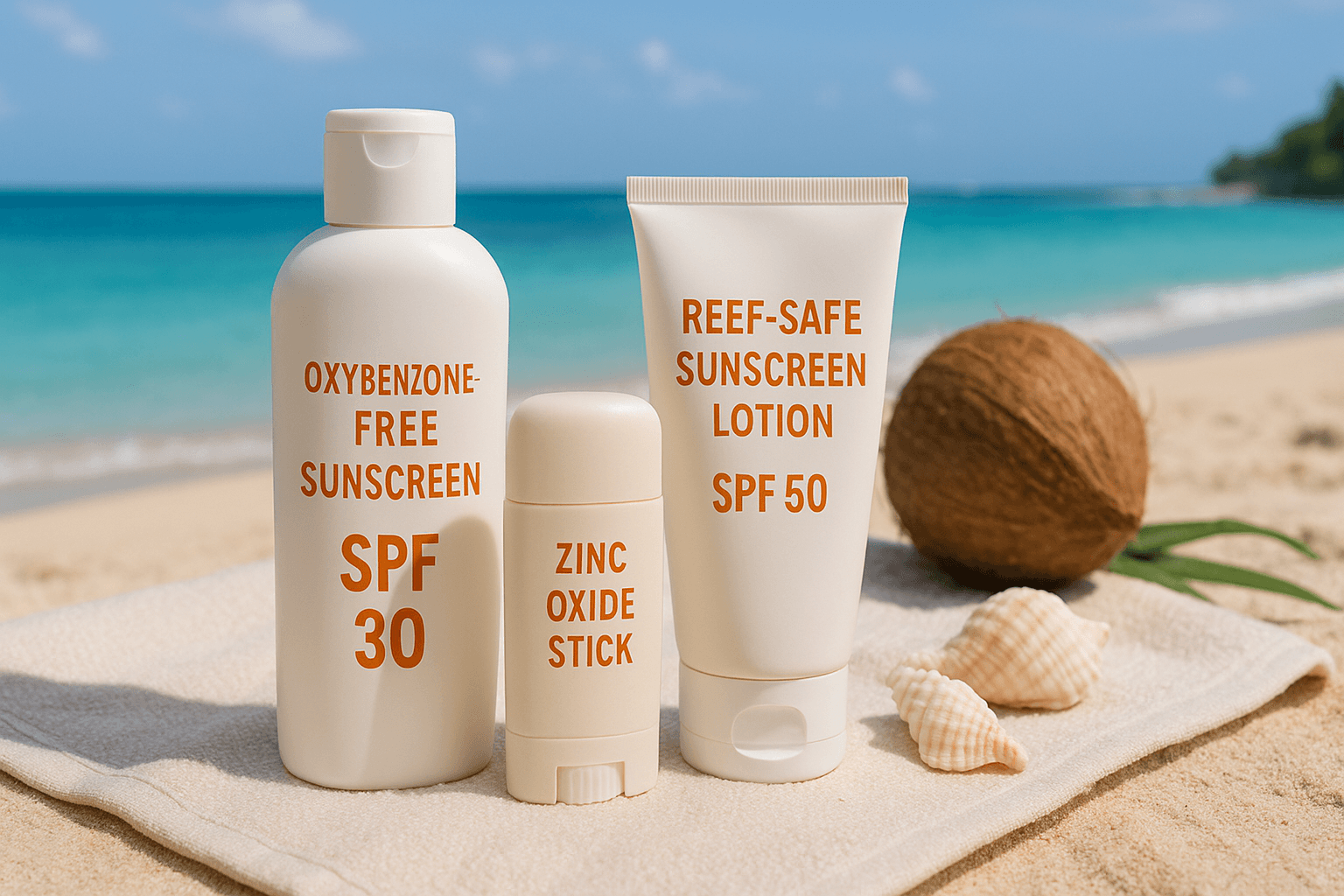
What Does Oxybenzone-Free Mean? Safer Sunscreen Choices
Oxybenzone in sunscreens can harm your health and the environment. Learn what oxybenzone-free means, why it’s used, and how to pick safer, eco-friendly sunscreens.
What Does Oxybenzone-Free Mean? Safer Sunscreen Choices
If you’ve ever scanned a sunscreen label, you might have noticed “oxybenzone-free” and wondered what it means. This term is a big deal for your health and the planet. Let’s break down what oxybenzone-free means, why oxybenzone is used, and how to choose safer sunscreens.
What Is Oxybenzone?
Oxybenzone is a chemical UV filter commonly found in sunscreens, lotions, and cosmetics. It absorbs UVA and UVB rays to protect your skin from sun damage. However, it’s also an endocrine disruptor that can penetrate the skin and enter the bloodstream, raising health and environmental concerns FDA.
Why Is Oxybenzone Used?
Manufacturers use oxybenzone because it’s effective and affordable. It provides broad-spectrum UV protection, is stable in sunlight, and blends easily into lightweight, non-greasy formulas. You’ll find it in chemical sunscreens, lip balms, and even some moisturizers with SPF, making it a go-to for sun protection products.
Why Is Oxybenzone Harmful?
Oxybenzone poses risks to both your health and the environment:
- Hormone Disruption: Studies show oxybenzone mimics estrogen, potentially affecting hormone balance and reproductive health PubMed.
- Skin Allergies: It can cause allergic reactions or irritation, especially in sensitive skin AAD.
- Coral Reef Damage: Oxybenzone contributes to coral bleaching, harming marine ecosystems. It’s banned in places like Hawaii and Palau NOAA.
Choosing oxybenzone-free sunscreens protects your body and fragile marine life. Curious about other skin irritants? See our guide on Hypoallergenic.
How to Choose Authentic Oxybenzone-Free Products
Not all sunscreens are created equal. Here’s how to pick oxybenzone-free options:
- Read Labels: Avoid oxybenzone and related chemicals like avobenzone or octinoxate. Look for mineral-based ingredients like zinc oxide or titanium dioxide.
- Check Certifications: Seek “Reef-Safe” or “EWG Verified” labels to ensure eco-friendly and safe formulas.
- Choose Mineral Sunscreens: These use physical blockers (zinc or titanium) instead of chemical filters, offering safer protection.
- Research Brands: Opt for brands transparent about their ingredients and committed to ocean-safe products.
Did You Know? Mineral sunscreens may leave a white cast but are gentler on skin and reefs. Newer formulas blend better for all skin tones!
Conclusion
Going oxybenzone-free is a win for your health and the planet. By choosing mineral-based, reef-safe sunscreens, you avoid hormone disruptors and protect marine life. Want more tips for safer products? Check out our articles on Phthalates-Free and FD&C-Free!
Sign in to vote on this article